
Introduction
Stepping into the world of medicine is an exciting yet daunting endeavor, especially when you consider the financial demands it entails. From the steep costs of the MCAT exam to the fees tied to medical school applications, aspiring physicians often face a challenging road. Fortunately, the Association of American Medical Colleges (AAMC) understands these struggles and offers a lifeline through its Fee Assistance Program (FAP). This initiative is tailored to support students who need a financial boost, providing benefits like reduced MCAT registration fees, waived application costs, and access to critical study resources. If you’re eyeing this opportunity, this comprehensive guide will walk you through every detail of the application process, ensuring you’re well-prepared to meet the criteria and improve your chances of approval.
Step 1: Confirm You’re Eligible
Before you dive into the application, it’s vital to determine whether you qualify for this program. The AAMC Fee Assistance Program is specifically designed for students whose financial circumstances make it tough to cover the expenses of the MCAT or medical school applications. To be eligible, you must meet two key requirements:
- Your household income must fall within the program’s designated limits, which are set to reflect genuine financial need.
- You need a permanent address within the United States.
These criteria ensure the program reaches those who truly require assistance. To avoid any surprises, head to the official AAMC website and dig into the eligibility specifics. Reviewing these guidelines carefully will help you confirm that your financial situation aligns with what the program demands, setting a solid foundation for your application.
Step 2: Master the Application Timeline
Timing is everything when it comes to securing this financial aid. The AAMC Fee Assistance Program typically opens its application window in December, with a new cycle kicking off in January for the following year. One critical detail to note: the benefits don’t apply retroactively. That means if you’ve already paid for the MCAT or submitted applications, you won’t be reimbursed—so applying early is your best strategy. To stay ahead of the game, make it a habit to check the AAMC website for updates. Better yet, sign up for their newsletter to get timely alerts about deadlines and other important dates. A proactive approach here can make all the difference.
Step 3: Round Up Your Documents
The AAMC needs concrete evidence to evaluate your application, so gathering the right paperwork is a crucial step. The exact documents you’ll need might vary depending on your personal situation, but here’s a detailed rundown of what’s commonly required:
Personal Identification
- A valid government-issued ID, such as a passport, driver’s license, or state ID card.
Proof of U.S. Citizenship or Residency - Documents like a U.S. birth certificate, passport, or certificate of naturalization.
- If you’re a permanent resident, include a copy of your green card.
Financial Records - Your most recent federal tax returns, complete with W-2 forms and any relevant schedules.
- Pay stubs from the past few months to show current income.
- Proof of public assistance or unemployment benefits, if you receive them.
Dependents - Birth certificates or court-issued custody orders for any dependents you’re claiming.
Student Loans - Statements showing your student loan balances and repayment status, if applicable.
Medical Expenses - Bills, receipts, or insurance statements that highlight significant medical costs.
Parental or Spousal Income - If you’re under 26 and listed as a dependent, your parents’ financial records are required.
- If you’re married, include your spouse’s income documentation.
Accuracy is non-negotiable here. Ensure every document is up to date and correct to prevent delays or rejections. Taking the time to organize this paperwork upfront will save you headaches later.
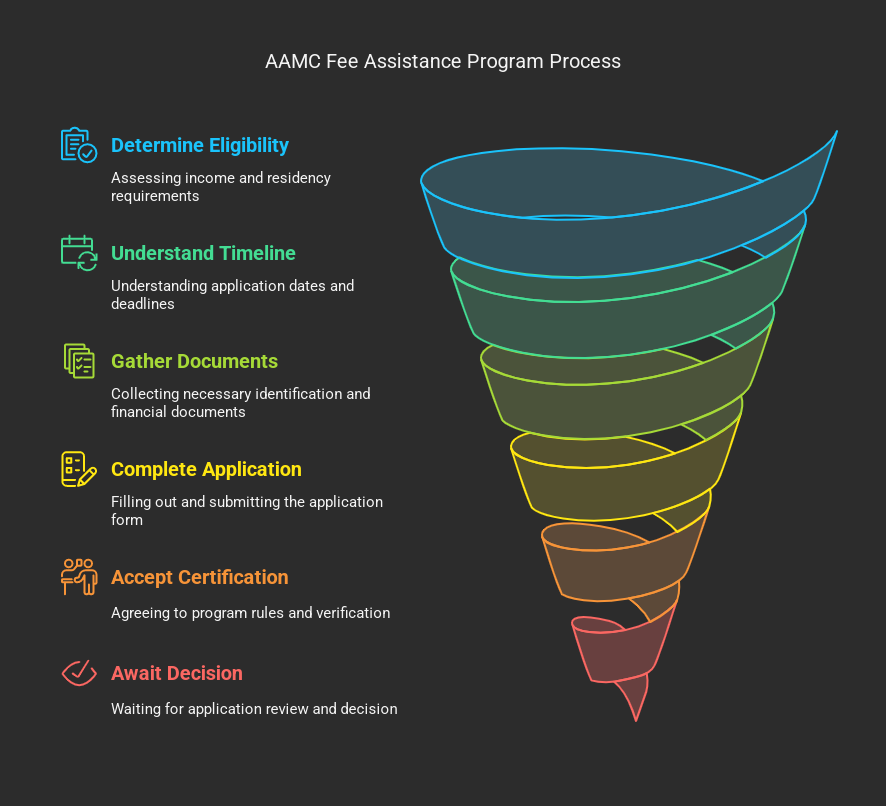
Step 4: Tackle the Online Application
With your documents in hand, it’s time to fill out the application itself. Start by creating an AAMC ID on their website, which will be your key to accessing the form. You’ll need to provide:
- Basic personal info, including your name, permanent address, citizenship status, and marital status.
- Details about your household size and total income.
- Parental financial information if you’re under 26 and considered a dependent.
This step requires attention to detail—small errors can trip you up. Once you’ve entered everything, take a moment to review it thoroughly before submitting. A polished application reflects your seriousness and helps avoid unnecessary setbacks.
Step 5: Sign the Certification Statement
As part of the process, you’ll encounter the Certification Statement—a document you must read and agree to. This statement serves as your pledge that:
- You fully understand the program’s rules and expectations.
- You’re willing to provide additional documentation if the AAMC requests it for verification.
By accepting this, you’re committing to transparency and compliance, which are cornerstones of the application process. It’s a straightforward but essential step, so don’t skip over it.
Step 6: Submit with Confidence
Before you hit that final submit button, give your application one last look. Double-check every section for accuracy, save a copy for your own records, and jot down the submission date. Once it’s sent, your application status will update to “Submitted” and “On Hold” while the AAMC team reviews it. This initial review period can take up to 10 business days, so settle in for a short wait and trust that you’ve done your part.
Step 7: Respond to Any Follow-Ups
In some cases, the AAMC might reach out for more information to validate your application. These requests could include:
- Documentation of child support payments.
- Social Security benefit statements.
- Letters detailing financial aid awards.
If you get one of these messages, don’t delay—reply as quickly as possible with the requested items. Prompt responses keep your application on track and show your commitment to the process.
Step 8: Await the Final Decision
Once all your materials are submitted—including any follow-up documents—the AAMC begins its final evaluation. They’ll assess your eligibility based on everything you’ve provided, a process that can take another 10 business days. Patience is key here. Resist the temptation to check in repeatedly unless there’s a pressing issue. You’ll receive an official notification, either approving or denying your request, so keep an eye on your inbox for that decisive update.
Step 9: Reap the Rewards
If you get the green light, congratulations—you’re now set to enjoy the program’s benefits! Approved applicants gain access to:
- Discounted MCAT registration fees, making the exam more affordable.
- Free MCAT prep materials to sharpen your skills.
- Waived fees for the AMCAS medical school application process.
- Full access to the Medical School Admission Requirements (MSAR) database, a treasure trove of admissions info.
These perks can significantly lighten your financial load and give you a leg up as you pursue medical school. Be sure to take full advantage of every resource available to maximize your success.
Final Reflections
The journey to becoming a doctor is both inspiring and rigorous, and financial barriers shouldn’t derail your ambitions. The AAMC Fee Assistance Program exists to bridge that gap, offering vital support to students from diverse backgrounds who might otherwise struggle to afford the costs of applying to medical school. If you meet the eligibility requirements, don’t hesitate—start gathering your documents, fill out the application with care, and submit it on time. This program isn’t just a financial aid tool; it’s a stepping stone that can propel you closer to your dream career. With persistence, preparation, and a little help from the AAMC, you’re well on your way to making that white coat yours. Good luck—your future in medicine is waiting!